
Thinking About Buying Gold? Here’s How It Actually Works in a Retirement Account

 Published April 01, 2026 – By Jesse Morgan.
Disclosure: This is an independent review site. Nevertheless the owners of this website may earn commissions by referring visitors to various investment opportunities in order to meet the running costs of this website. The content on this website does not constitute financial advice. You are encouraged to talk to your financial advisor before making any investment decision.
Gold prices pulled back — are you considering entering?
Before you do, there’s something most investors get wrong:
They buy physical gold… but keep it completely outside their retirement strategy.
You don’t have to.
Under the right structure, physical gold can be added to certain IRAs — legally and securely.
The process itself isn’t complicated.
But the way it’s set up is where most people make mistakes.
Whether this makes sense for you depends less on gold itself — and more on how you choose to hold it.
This guide walks you through exactly how it works — step by step — so you can decide if it fits your retirement strategy.
What Makes a Gold IRA Different From a Traditional IRA?
A Gold IRA is a type of self-directed Individual Retirement Account.
Unlike traditional IRAs that usually hold stocks, bonds, or mutual funds, a Gold IRA allows certain IRS-approved physical precious metals to be held inside a retirement account.
The key difference is not tax treatment — it’s how the assets are held, stored, and administered.
Here’s what the process actually looks like:
Step 1: Opening a Self-Directed IRA
To start a Gold IRA, you must open an account with a custodian that supports self-directed IRAs.
The custodian is responsible for:
Administering the account
Handling IRS reporting
Ensuring compliance with retirement rules
Most traditional banks do not offer this type of account, which is why specialized custodians are used.


Step 2: Funding the Account
Once the account is opened, it must be funded. This typically happens in one of two ways:
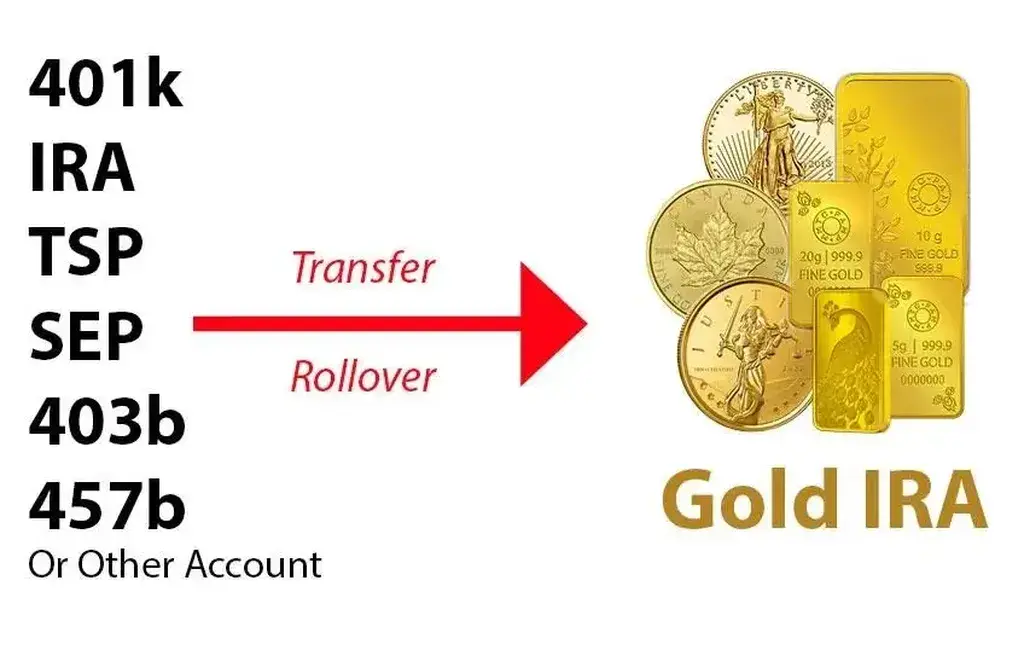
Rollover or Transfer
Many investors fund a Gold IRA by moving funds from:
An existing IRA
A former employer’s 401(k)
This process is structured to remain tax-advantaged when done correctly.
Direct Contributions
Some investors also make direct contributions, subject to IRS annual limits.
The funding method depends on individual circumstances and retirement goals.
Step 3: Selecting IRS-Approved Metals
Not all gold or silver products are allowed in a Gold IRA.
The IRS restricts:
Purity levels
Eligible coins and bars
Approved refiners and mints
Only metals that meet these requirements can be held inside the account.
Collectibles and personal jewelry are not permitted.
Step 4: Secure Storage in an Approved Depository
One of the most misunderstood aspects of a Gold IRA is storage.
IRS rules require that metals be stored in an approved depository, not at home.
These facilities typically offer:
High-security vaults
Insurance coverage
Segregated or non-segregated storage options
This requirement exists to protect retirement assets and maintain compliance.
Step 5: Ongoing Account Administration
After setup, the Gold IRA functions similarly to other retirement accounts in terms of administration.
Ongoing responsibilities include:
Annual custodial reporting
Storage arrangements
Compliance oversight
Because physical assets are involved, Gold IRAs usually have additional fees, which is why understanding how Gold IRA fees work is important before proceeding.
Considering Your Next Step? Start with the Facts!
Not All Gold IRA Companies Are the Same. Here’s What Most Investors Miss.
If you’re thinking about adding gold to your retirement, the biggest mistake isn’t timing the market — It’s choosing the wrong company to set it up.
Gold Price Volatility: A Historical Perspective
This chart is provided for historical and educational context only and should not be interpreted as a prediction of future performance.
How Distributions Work in a Gold IRA
When distributions are taken, investors generally have two options:
Sell metals for cash within the account
Take physical delivery of the metals (subject to tax rules)
The tax treatment depends on:
Account type (Traditional vs Roth)
Age at distribution
IRS regulations in effect at the time
Planning ahead helps avoid surprises later.
If you’re evaluating providers, comparing fee structures and buyback policies side by side can clarify important differences before making any commitment.
How Long Do Investors Typically Hold a Gold IRA?
Gold IRAs are generally used as long-term retirement vehicles, not short-term trading accounts.
Many investors consider them:
As part of a diversification strategy
Alongside traditional retirement accounts
With longer holding horizons in mind
This time horizon is one reason timing matters when deciding whether a Gold IRA makes sense.
Common Misunderstandings About How Gold IRAs Work
Some frequent misconceptions include:
Believing metals can be stored at home
Assuming Gold IRAs are risk-free
Thinking setup is instantaneous
In reality, Gold IRAs involve structure, rules, and responsibility — which is why education comes first.
Related:

Gold IRA Fees Explained: What Retirement Investors Should Expect

Gold IRA Storage Explained: Where Your Metals Are Kept and Why It Matters

Silver IRA Explained: Why More Investors Are Turning to Silver in 2026

Considering Your Next Step? Start with the Facts!
Not All Gold IRA Companies Are the Same. Here’s What Most Investors Miss.
If you’re thinking about adding gold to your retirement, the biggest mistake isn’t timing the market — It’s choosing the wrong company to set it up.
(Educational materials only — no obligation required)