Disclosure: This is an independent review site. Nevertheless the owners of this website may earn commissions by referring visitors to various investment opportunities in order to meet the running costs of this website. The content on this website does not constitute financial advice. You are encouraged to talk to your financial advisor before making any investment decision.
Gold IRA vs Traditional IRA: Key Differences Explained Clearly
When planning for retirement, Individual Retirement Accounts (IRAs) are among the most commonly used tools.
However, not all IRAs function the same way.
Two options often discussed are the Traditional IRA and the Gold IRA. While both are retirement accounts governed by IRS rules, they differ significantly in structure, assets, and purpose.
This guide explains the key differences clearly, so you can understand how each works before deciding which, if either, fits your retirement strategy.

What Is a Traditional IRA?
A Traditional IRA is a retirement account that typically holds paper-based investments such as:
Stocks
Bonds
Mutual funds
Exchange-traded funds (ETFs)
Contributions may be tax-deductible depending on income and participation in employer plans, and taxes are generally paid upon withdrawal during retirement.
Traditional IRAs are widely used because they are:
Simple to open
Familiar to most investors
Easily managed through banks and brokerages
What Is a Gold IRA?
A Gold IRA is a type of self-directed IRA that allows certain IRS-approved physical precious metals, such as gold and silver, to be held inside a retirement account.
Unlike Traditional IRAs:
Assets are tangible rather than digital
Metals must meet specific purity requirements
Storage is handled by IRS-approved depositories
Understanding how a Gold IRA works helps clarify why its structure differs from traditional accounts.
Key Structural Differences
| Feature | Traditional IRA | Gold IRA |
|---|---|---|
| Asset Type | Paper-based investments | Physical precious metals |
| Custodian | Bank or brokerage | Self-directed IRA custodian |
| Storage | Digital / custodial | IRS-approved depository |
| Market Exposure | Direct | Indirect / lower correlation |
| Complexity | Lower | Higher |
These differences influence how each account behaves during different economic conditions.
Risk and Volatility Considerations
Traditional IRAs are closely tied to financial markets. Their value can fluctuate based on:
Stock market performance
Interest rate changes
Economic conditions
Gold IRAs introduce different risks, including:
Precious metals price movement
Storage and administrative considerations
Neither option eliminates risk; they simply involve different types of risk.
Fee Differences to Understand
Traditional IRAs often include:
-
Embedded fund expense ratios
-
Brokerage management fees
Gold IRAs typically involve:
-
Custodial fees
-
Storage fees
-
Administrative costs
Understanding Gold IRA fees is essential when comparing long-term costs.
When a Traditional IRA May Make More Sense
A Traditional IRA may appeal to investors who:
Prefer simplicity
Are comfortable with market-based growth
Want minimal administrative complexity
These accounts are often used as core retirement vehicles.
When a Gold IRA May Be Considered
A Gold IRA may be considered by investors who:
Want diversification beyond paper assets
Are concerned about inflation or market volatility
Prefer tangible assets as part of a broader strategy
In many cases, Gold IRAs are used as complements, not replacements.
Can You Have Both?
Yes. Some retirement investors hold:
A Traditional IRA for market exposure
A Gold IRA for diversification
Using both accounts may allow for balance without relying entirely on one asset type.
Final Thoughts on Choosing Between a Gold IRA and Traditional IRA
Choosing between a Gold IRA vs Traditional IRA is not about determining which is “better.”
It is about understanding:
How each account works
What role it would play in your overall plan
Whether its structure aligns with your long-term goals
Education and clarity help investors make more confident decisions.
Learn More Before Taking the Next Step
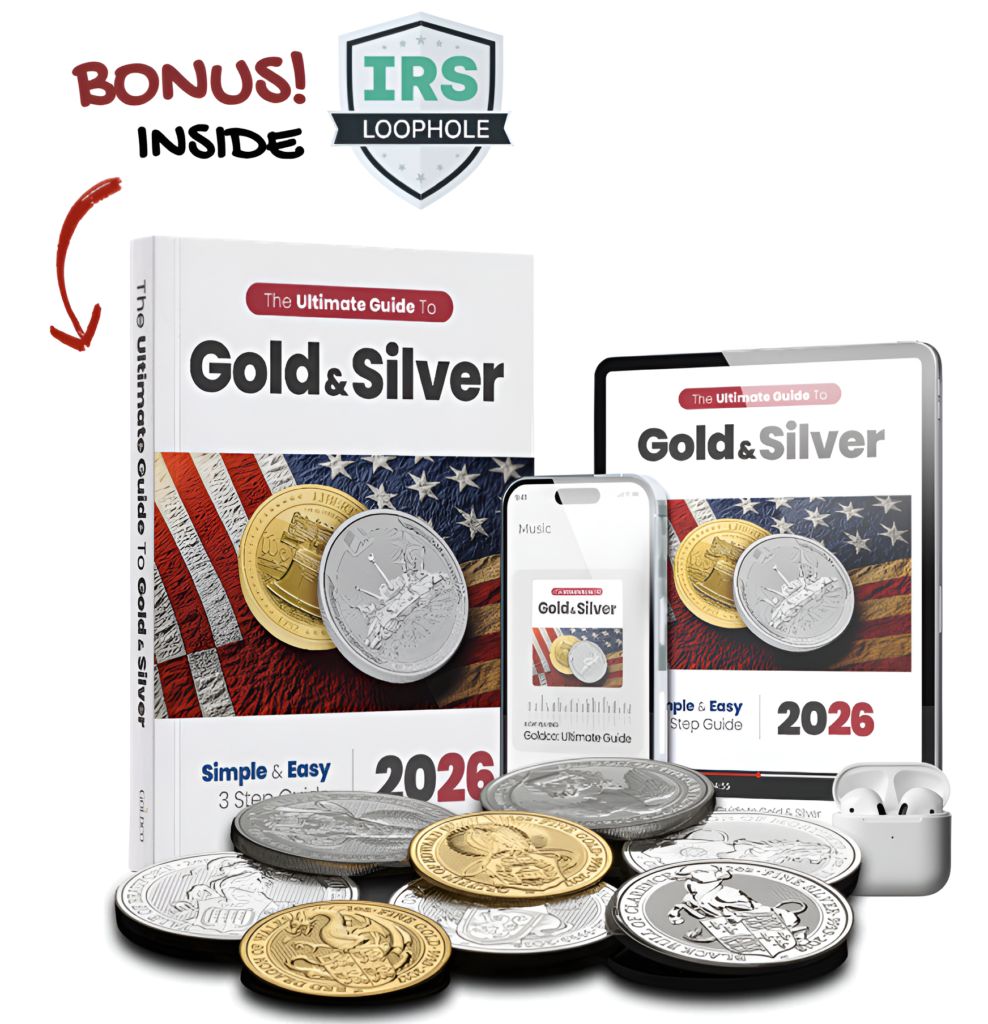
Many investors choose to review educational materials before deciding whether to explore a Gold IRA further.
You can learn how Gold and Silver IRAs are structured, what options exist, and what questions to ask—without opening an account or making a commitment.
(Educational materials only — no obligation required)