
Silver IRA Explained: Why More Investors Are Turning to Silver in 2026

 Published March 13, 2026 – By Jesse Morgan.
Disclosure: This is an independent review site. Nevertheless the owners of this website may earn commissions by referring visitors to various investment opportunities in order to meet the running costs of this website. The content on this website does not constitute financial advice. You are encouraged to talk to your financial advisor before making any investment decision.
In recent months, silver has attracted renewed attention from investors following a sharp and unexpected price move.
For retirement-focused investors, this renewed interest has raised an important question:
Can silver play a meaningful role inside a retirement account?
This guide explains what a Silver IRA is, how it works, and why some investors are now considering silver as part of a long-term retirement strategy — especially during periods of economic uncertainty.
This content is educational only, designed to help you understand your options before making any decisions.
What Is a Silver IRA?
A Silver IRA is a type of self-directed Individual Retirement Account that allows investors to hold IRS-approved physical silver instead of traditional paper assets.
Unlike standard IRAs that typically hold stocks, bonds, or mutual funds, a Silver IRA holds:
Physical silver coins or bars
Stored in an IRS-approved depository
Managed by a qualified custodian
The account follows the same tax rules as traditional or Roth IRAs, depending on how it’s structured.
How a Silver IRA Works (Step by Step)
Open a Self-Directed IRA
You must work with a custodian that supports precious metals.Fund the Account
Funding can come from:A rollover from an existing IRA or 401(k)
A direct contribution (within IRS limits)
Select IRS-Approved Silver
Only specific silver products meeting purity requirements are allowed.Secure Storage
Silver must be stored in an IRS-approved depository — not at home.Ongoing Administration
The custodian handles reporting, compliance, and recordkeeping.
Why Some Investors Are Considering Silver Now
Silver has historically served both industrial and monetary roles, which can make its price behavior different from gold.
Investors often cite the following reasons for considering silver:
Increased demand during inflationary periods
Industrial use across technology and renewable energy
Lower entry cost compared to gold
Portfolio diversification beyond paper assets
That said, silver prices can be volatile and should be viewed as one component of a diversified strategy, not a standalone solution.
What Silver Products Are Allowed in a Silver IRA?
The IRS allows only specific silver products, including:
Silver coins or bars with a minimum purity of .999
Products produced by approved refiners or mints
Collectible or non-approved silver items are not permitted.
Silver IRA vs. Gold IRA
While both accounts operate under similar rules, they often appeal to different investor preferences.
| Feature | Silver IRA | Gold IRA |
|---|---|---|
| Price Volatility | Higher | Lower |
| Entry Cost | Lower | Higher |
| Industrial Demand | Yes | Limited |
| Historical Store of Value | Moderate | Strong |
Some investors choose to hold both gold and silver to balance stability and growth potential.
Fees and Minimums to Be Aware Of
Silver IRAs typically involve additional costs compared to traditional IRAs, such as:
Custodian fees
Storage fees
Administrative fees
Some providers may require minimum investment amounts, which should be reviewed carefully before proceeding.
Is a Silver IRA Right for Everyone?
A Silver IRA may appeal to individuals who:
Want to diversify retirement assets
Are comfortable with price fluctuations
Prefer tangible assets alongside traditional investments
It may be less suitable for those seeking short-term trading or minimal account complexity.
Considering Your Next Step? Start with the Facts!
If you’re still researching whether a Gold or Silver IRA fits your long-term plans, there’s no need to rush into a decision.
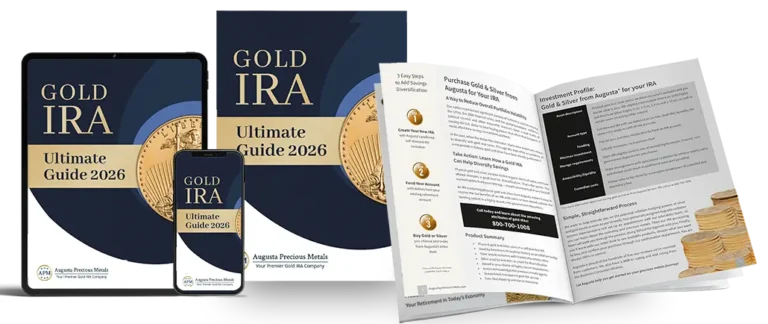
Augusta Precious Metals offers a free educational guide designed to help you understand how precious metals IRAs work, what to watch out for in the industry, and what questions to ask before speaking with any company — with no pressure and no obligation.
Educational materials only. No obligation.
Frequently Asked Questions
Yes, as long as it meets IRS purity and storage requirements.
No. IRS rules require approved depository storage.
No. Silver prices can fluctuate and should be considered as part of a diversified strategy.